A. M. Esmonde talks Blood Hunger and Horror. (part two)
Interview the Volts Show

Tuesday, 31 August 2010


Saturday, 28 August 2010
Horror interview with A. M. Esmonde part 1 Exclusive
A. M. Esmonde talks Blood Hunger and Horror. (part one)
Interview the Volts Show
Interview the Volts Show
Tuesday, 17 August 2010
The Bourne films - Ludlum legacy

Ever heard of Jonathan Ryder and Michael Shepherd? How about Robert Ludlum, the former are his pseudonyms. Ludlum has sold an estimated 290-500 million books, but more so for me he is the creator of Jason Bourne.
 Sadly, aged 73,Robert Ludlum died 12 March 2001 during the development stage of Bourne Identity and only saw the TV version that aired in 1988 starring ageing Richard Chamberlain and Jaclyn Smith. While it was closer to Ludlum’s novel it had it dated badly and his Jason Bourne character needed an update, allegedly the charismatic author acknowledged this and was complementary of the changes and style proposed for the Doug Liman’s Bourne.
The film would send ripples across the movie world and wake up producers and influenced moviemakers. As a result good old James Bond was given a make-over and action scenes would never be filmed the same again.
Below are my thoughts on the Bourne films, the legacy Ludlum left us...
The Bourne Identity (2002)

Thanks to Bourne, Bond was given that update make-over that was needed. Although a loose adaptation of Robert Ludlum's novel it's a far superior to closer rework The Bourne Identity (1988) TV movie starring Richard Chamberlain and 'Angel' Jaclyn Smith.
Matt Damon's does a surprisingly great job, not just as Jason Bourne the character but against type cast, convincing the viewer that he's a dangerous and physical spy. While the Bourne Identity is action packed with some fantastic fight choreography and car chases it feels realistically grounded as an effective espionage thriller.

The captivating screenplay by Tony Gilroy and W. Blake Herron gives the cast time to shine. Franka Potente Brian Cox and Chris Cooper are all on fine form and there's also a small, memorable role by Clive Owen as an assassin.
 The films has a great look and benefits from the real life European locations, Doug Liman's direction is exceptional utilising a hand held style that has become common place in mainstream films since. The score is exciting and Moby's theme tune is captivating, for such a high concept film Bourne Identity is very convincing,- it avoids clichés, has some twists and exudes atmosphere.
The Bourne Identity is must see.
 The Bourne Supremacy (2004)
In this action packed follow up Bourne is framed and is forced to take up his former life as an assassin to survive. The Bourne Supremacy is a gutsy squeal to The Bourne Identity (2002) using the character based on an adaptation of Robert Ludlum's best selling novel
Paul Greengrass takes over the directing reins for Supremacy, while previous director Doug Liman's takes a producer credit. Greengrass maybe a little over zealous with the hand-held camera work, but continues the series more than effectively, successfully injecting some more energy into proceedings. In some ways the story is more interesting and complex than the first, again Tony Gilroy 's amazing screenplay avoids the clichés, dishing-out plenty of surprises and a major plot turning in the first minutes.

Brian Cox reprises his role as Ward Abbott and his character goes though some changes as the predicament and pressure he's under increases. Like Identity there's some fantastic fight choreography notably when Bourne, again played fittingly by Matt Damon, goes head to head with Jarda played by the understated excellent actor Marton Csokas. Julia Stiles returns as Nicky and new comer to the Bourne series Joan Allen as Pamela Landy is convincing. The cast are all first-rate including, Karl Urban of Star Trek and The Two Towers fame, as the Russian killer Kirill.
 The ending leaves an upbeat intrigue that few films of this genre manage to stir. The Bourne Supremacy has a great look and again benefits from the real on location feel coupled with a complimenting score by John Powell, which leaves you wanting more of the same.
It's intelligent and captivating, packed with car chases, assassins and political conspiracy. Damon again is Bourne this time deeper and more dangerous. The perfect sequel.
 The Bourne Ultimatum (2007)
Director Paul Greengrass for this instalment Ultimatum picks up (before!) where he last on left off in Supremacy. It sharp, slick and entertaining rightly winning three Oscars.
Although loosely based on Robert Ludlum novels, close friends of his are convinced that he would have enjoyed these film as much as the viewers have had watching them. Again with great directing, fantastic gritty and atmospheric on location shooting, which includes a remarkably key sequence in London it doesn't fell like a third film. Bourne again has to evade, out-manoeuvre, and outsmart highly-trained agents and assassins, while it might sound like old ground, Ultimatum comes with plenty of new surprises.

Like it's predecessors it zips along at a fast pace with exceptional stunts and gripping dialogue. You know you're in good hands when the original writer Tony Gilroy is still on board and Matt Damon returns as Jason Bourne.
 Albert Finney puts in a nice cameo appearance as Dr. Albert Hirsch who is partly responsible for origins of Treadstone and Bourne's training. Although Brian Cox as protagonist Ward Abbott is sorely, but rightly missing, there's enough unscrupulous officials played by seasoned actors Scott Glenn, Kramer, and David Strathairn who excellently portrays Noah Vosen to fill the gap. Julia Stiles returns as Nicky Parsons in a meatier role and Joan Allen once again superbly plays Pam Landy.
 It's has a gripping final act and once again the ended is exhilarating and emotionally stirring. It's grounded, it's understated it's Bourne.
 Tuesday, 10 August 2010
The Breathing Dead show Episode 6
Sophia Disgrace present's The Breathing Dead show Episode 6. This episode heroes of Horror.
Music by V0iD and Kevin Macleod.
Planet of the Apes versus... Planet of the Apes

Planet of the Apes (1968) is without a doubt a milestone in novel adaptations and science fiction. As a series they touched on social unrest, evolution and the possibilities of space and time travel.
Four sequels followed Franklin J. Schaffner apes: Beneath the Planet of the Apes (1970); Escape from the Planet of the Apes (1971); Conquest of the Planet of the Apes (1972); Battle for the Planet of the Apes (1973)followed apes quickly in secession and while the sequels were inciting the quality never did matched the original.

The TV series followed with Planet of the Apes (1974) and the animated Return to the Planet of the Apes(1975). The hastely speed in which they were made and released in amongst a toy spree (before the infamous Star Wars (1977) merchandising) is what probably lead to it's downfall, in a way they slaughted the cash-cow and golden goose within 6 years.


In 2001 Tim Burtons reimagining was released and ten years later Rise of the Planet of the Apes, an original origin film that pays homage to the original 1968 film was released.
 Below are my comments on the 1968 original, the 2001 reimagined version and 2011's Rise...
Rise of the Planet of the Apes (2011)
 In a personal bid to help his father's medical condition a man's experiments for a genetic engineering company leads to the dangerous development of an intelligence in apes.
Although it departs in many ways from the original films, it is a fantastic piece of entertainment in its own right. Rise of the Planet of The Apes mixes the right amount of character development with story, effects and performances capturing the imagination of a new generation.

Despite a good cast with great performances notably from John Lithgow and James Franco, it's the apes themselves and Andy Serkis coupled with some state of the art special effects that steal the show.
Amanda Silver and Rick Jaffa's writing keeps the action and emotion somewhat believable, that Franco handles particularly well. The contemporary setting of San Francisco gives the film a familiar believable feel and it is a good contrast to the dark caged scenes and sterile lab sets. Patrick Doyle's score compliments the action and stirs feelings during the poignant moments.

Rupert Wyatt's direction ensures there's enough surprises and action setups to give Rise momentum. Wyatt's handling of Caesar manages to demand attention throughout with a welcomed display of edginess, danger and intelligence. There's also an added odd eeriness due to the ape actions and glancing looks. In addition, the writers and Wyatt thoughtfully give enough nods to the original to humble fans and hints at possible sequels throughout to tease further interest.
Overall, Rise manages to be an emotional ride, successfully grounding the concept of the originals while eradicating Burton's 2001 missed opportunity. Caesar is home...
 Planet of the Apes (1968)
Franklin J. Schaffner is never given enough credit when it comes to the genuine sci-fi classic Planet of the Apes. The talking points are usually the twist ending, or the late great Charlton Heston and Roddy McDowall.
 A philosophical sci-fi made in 1968 and nominated for two Oscars it still holds up today as a social parable, effective drama with a relevant and underlining social commentary. It's the primitive depiction of an ape civilisation rather than technologically society made Planet of the Apes standout as the iconic film it is haled as today.
'Apes builds up nicely, there's a wonderful score, (groundbreaking for the time) by Jerry Goldsmith, creating eerie and ominous atmosphere with the first exciting ape reveal at about 30 minutes in.
The film is wonderfully directed and has a solicitous and thought proving screenplay by Michael Wilson & Rod Serling. That said source material was from Pierre Boulle's very wry, whimsical and thoughtful novel. Astoundingly Boulle is also author of The Bridge over the River Kwai.
The few visual effects are sufficient but the ape make up is
 admirable and star of the show. Recognisable only by their voices Kim Hunter as human conservationist Dr. Zira and the anxious Cornelius played by McDowall are splendidly magnificent as they assist Taylor played by the boldly cast film legend Heston to escape the command of the apes. The attractive Linda Harrison, who plays Nova is effective and the British classical actor, in orangutan make-up Maurice Evans is outstanding, giving a weight of believability to the subject matter.
Planet of the Apes is an original science fiction must see.
 Planet of the Apes (2001)
 Remake, re-imagination whatever you'd like to label it as, Planet of the Apes (2001) is inferior to the original 1968 film in almost every way.
 That said, the make up is excellent, Tim Roth as Thade is fantastic, Colleen Atwood costumes are notable and Danny Elfman's thumping score is an achievement. The spaceship sets and on the location night scenes have a unique atmosphere and edge about them. Even Mark Wahlberg tries his best to handle the half-baked script and there are a few welcomed cameos from some of the original cast.
On the flip side there's some choppy editing, an uneven story, the ape city and the sandy finale are emotionless and uninspiring. Slipped in is some unnecessary humour, usually supplied by Paul Giamatti (aptly named Limbo) and you never feel any danger or threat from the apes apart
 from Thade. Also, there's no likable characters to really root for. Nevertheless, nothing can save nominated director and visionary Tim Burton's incarnation of Apes.
The fist ten minutes and the last two are probably the most attention-grabbing of this version but with an estimated budget $100,000,000 there's no excuse for the travesty in between. Thankfully Rise of the Planet of th Apes (2011) put the series on track.
Wednesday, 4 August 2010
Thriller films - line between good and evil
What makes a good Thriller? I don't believe there is a formula that makes a thriller, the aspects of a successful thriller usually revolve around the opposing forces of good versus evil, however, the line between good and evil can be very murky, it's usually high-stakes…a ticking clock, life or death in the balance with some kind of realisation.
The thriller genre is packed with sub-genres and there are many classic thrillers. Hitchcock was the master of suspense thrillers, Rear Window (1954) and Dial M for Murder (1954) are two of my favourites. There are notable thrillers - Se7en (1995) ; Fatal Attraction (1987); Les diaboliques (1955) to name a few. From The Godfather (1972); Aliens (1986);The Usual Suspects (1995) to Jaws (1975) are classed as thrillers. While I wouldn't necessary agree fully with all the categories of the aforementioned it's clear that thrillers are hard to define.
The thriller genre is packed with sub-genres and there are many classic thrillers. Hitchcock was the master of suspense thrillers, Rear Window (1954) and Dial M for Murder (1954) are two of my favourites. There are notable thrillers - Se7en (1995) ; Fatal Attraction (1987); Les diaboliques (1955) to name a few. From The Godfather (1972); Aliens (1986);The Usual Suspects (1995) to Jaws (1975) are classed as thrillers. While I wouldn't necessary agree fully with all the categories of the aforementioned it's clear that thrillers are hard to define.
Below are my comments on a few mystery thrillers that are typical in some cases but in others definitive of the genre. I hope you enjoy my thoughts these thrillers, possibly seek them out or even steer clear from them...

Angel Heart (1987)
P.I Harry Angel has a new case, to find a man called Johnny Favourite, only it isn't a straight forward missing person's case. Prefect, grounded, Alan's Parker's voodoo-laden, hard-boiled film is the ultimate mystery film.

Angel Heart (1987)
P.I Harry Angel has a new case, to find a man called Johnny Favourite, only it isn't a straight forward missing person's case. Prefect, grounded, Alan's Parker's voodoo-laden, hard-boiled film is the ultimate mystery film.

This is without a doubt Mickey Rourke's finest role. The supporting cast deliver some of the most interesting and story driven performance that include Robert De Niro, Lisa Bonet and Charlotte Rampling to name a few.

You can feel 1955's New Orleans warm rain, hear the jazz, taste the grit of 1950's Brooklyn, the film's Cinematography is amazing,. The films realism captures the time wholly, Trevor Jones mystery music builds up the tension as murders increase Harry Angel is drawn into eventful dangerous meetings. The dialogue is flawless and the ending has a mind-blowing twist that has been imitated but never surpassed. The Johnny Favourite theme tune will linger with you long after the end credits.
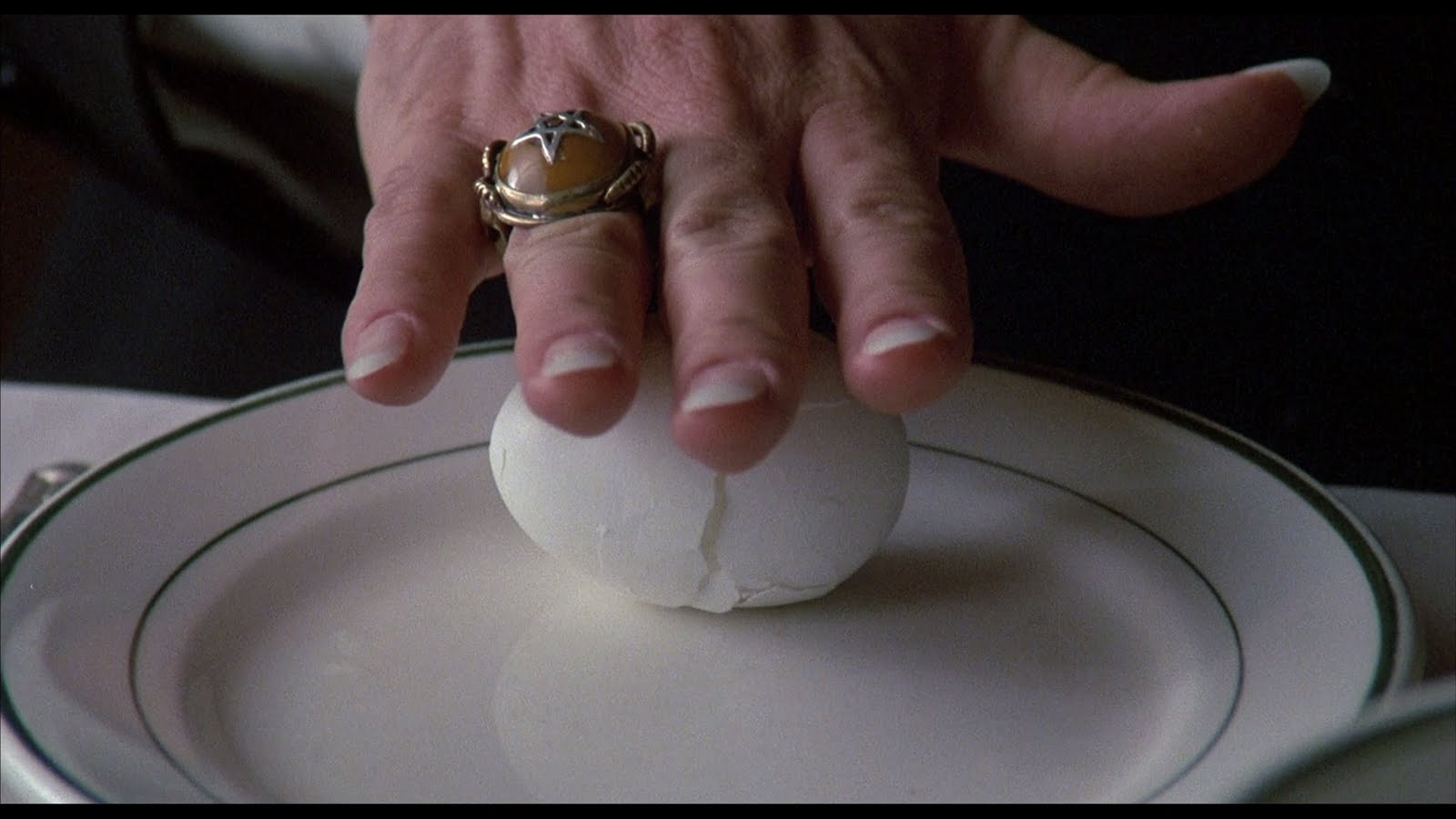
A timeless, eerie and realistic atmospheric classic. Perfect.

The Game (1997)
Wealthy financier Nicholas Van gets drawn into a live-action game that consumes his life. Douglas perfectly portrays the characters journey, excellently written by John D. Brancato & Michael Ferris.

It's a psychological thriller packed with intrigue and suspense, a creepy clown and feeling of helplessness. Supporting actors are an array of familiar faces that include flawless performances from Sean Penn, Deborah Kara Unger and Armin Mueller-Stahl.
The flashback scenes of a younger Nicholas are captured beautifully by cinematographer Harris Savides and Howard Shore's score heightens the pivotal moments elegantly.

The Game is an exciting Hitcock-like yarn, with a principled message of wealth and youth, it's a fantastic thriller with amazing twists and turns from David Fincher. A must see.

Basic Instinct (1992)
Known at the time for its nookie and infamous cross-legged interrogation scene, 50 San Francisco riot police had to be present at every location to deal with picketing gay and lesbian activists, it's hard to believe the film caused such a stir at the time.

Michael Douglas plays a police detective investigating a brutal murder, in which a beautiful and seductive woman could be involved. It is without doubt Sharon Stone's best and most memorable performance, as writer Catherine Tramell, who taps into every mans fear of being lied to, rejected and so on.

The supporting cast are effective, it has a few familiar faces in there. Jeanne Tripplehorn, George Dzundza and Leilani Sarelle are surprisingly good. That said, Douglas who gives great performance does seem miscast especially in the night-club, where he gurns and sports a jumper that will stick in your mind forever.

Despite the dramatic score being over powering in places it adds to the film stylised charm. Director Paul Verhoeven keeps set ups interesting and writer Joe Eszterhas puts in enough twists, albeit clichéd, to keep you interested.
Arguably less effective than Al Pacino's 1989's Sea of love, Basic Instinct is a big budget solid thriller that still stands up today.
Shutter Island (2010)
U.S. Marshal Teddy Daniel's and his partner investigating the disappearance of a murderess who escaped from a hospital for the criminally insane and is apparently hiding on the remote Shutter Island. 

Martin Scorsese again demonstrates why he is one of the worlds best directors. The CGI is unnoticeable and only used to create the imagery of Shutter Island. A WW2 concentration camp, Dachau, is recreated for a disturbing and key scene. Scorsese perfectly recreates the 1954, bring the best of location, sets, lighting and sound together to deliver a fantastic psychological thriller.

The cast is a fine line-up that includes Leonardo DiCaprio who manages to get away with the complexity of the characters situation; Swede Max von Sydow is on usual perfect form. Zodiac (2007) and Collateral's (2004) Mark Ruffalo is excellent, although a little under used as Daniel's partner. Thankfully Ben Kingsley has taken on a role worthy of his abilities as the empathetic Dr. John Cawley. In addition, Ted Levine and Elias Koteas show up in almost cameo appearances.

The cast is a fine line-up that includes Leonardo DiCaprio who manages to get away with the complexity of the characters situation; Swede Max von Sydow is on usual perfect form. Zodiac (2007) and Collateral's (2004) Mark Ruffalo is excellent, although a little under used as Daniel's partner. Thankfully Ben Kingsley has taken on a role worthy of his abilities as the empathetic Dr. John Cawley. In addition, Ted Levine and Elias Koteas show up in almost cameo appearances.

There's plenty to like about Shutter Island, it exudes atmosphere, and it's foreboding and eerie. The story tackles alcoholism, mental health and asks the viewer to question what should be perceived as a dream and what should perceives as real. It's an intriguing mystery that not since Angel Heart (1987) have I seen such a well constructed psychological period film. Credit must go to the Laeta Kalogridis' screen-play and Dennis Lehane's novel.
Possibly one of Scorsese' best films.
Monday, 2 August 2010
The Black and White of Horror

As a supporter of the Classic Horror Campaign I've up dated this post. The beauty of black and white photography aside, today's black and white motion film is usually used as a nostalgic gimmick, with exceptions of the likes of Tim Burton's Ed Wood (1994). Apart from the obvious monster classics of the 30's and 40's there are countless black white (b/w) films regarded as 'classic'. Purists and b/w fans would probably have me locked up and flogged but I must admit I really do not think b/w necessary adds to the aesthetics of a film. I would argue that the feel and atmosphere can stir the same emotions in colour pallet. To sum it up in a sentence, we don't see life through our eyes in black and white.
Nevertheless, many great films were made in black and white and some of those were very influential horrors which I've commented on below. I hope you enjoy and possibly seek out if you not seen them already...

House on Haunted Hill (1959)
Allegedly rousing Alfred Hitchcock to make the horror film - Psycho (1960), and while the setting is not as lavish as The Haunting (1963) the House on Haunted Hill is an entertaining 50's movie.
%20Vincent%20Price%20DVD%20Review%20PDVD_009.jpeg) Eccentric millionaire Fredrick Loren played wonderfully by Vincent Price invites 5 people to the house on Haunted Hill for a "haunted House" party and they'll get $10,000 if they survive the night. The quirky house owner, Mr. Pritchard is played entertainingly by Elisha Cook Jr. and the rest of the cast are good enough.
Eccentric millionaire Fredrick Loren played wonderfully by Vincent Price invites 5 people to the house on Haunted Hill for a "haunted House" party and they'll get $10,000 if they survive the night. The quirky house owner, Mr. Pritchard is played entertainingly by Elisha Cook Jr. and the rest of the cast are good enough.  Vincent Price is without a doubt the best thing about the film oozing charm, wit and panache. What is interesting and worthy of note is Robb White's adultery plot builds the tension and interaction between Price and Ohmart, reminiscent intensified versions of the characters in Hitchcock's Dial M for Murder (1954).
 While the story 'twist' is well developed the large modern 50's house story is not. There are some creepy moments that include the striking Carol Ohmart as Annabelle Loren but the lighting and sets are so crisp it fails to create any real brooding atmosphere and sadly a movie of its time, the women shriek a lot.
Should the house itself has been more traditionally githic this may have been a near on perfect black and white chiller. Still, it's good fun and worth checking out on a quiet dark night if even just to hear Price's deep tones.

The Haunting (1963/I)
 Dr. Markway is undertaking research to prove the existence of ghosts and decides to investigate Hill House. He is accompanied by a sceptic, a clairvoyant and an insecure attuned psychic. Even though made in 1963 it is still very enjoyable even if a product of its time.
Nelson Gidding screenplay is based on novel "The Haunting of Hill House" by Shirley Jackson. The Haunting is an archetype haunted mansion film, superbly directed by Robert Wise. Excellent, painstakingly designed sets, amazing use of sound effects bringing to life the things that go bump in the night, which all add to the eerie and spooky atmosphere.
 Richard Johnson plays the perfect English gentleman, Dr. John Markway. Russ Tamblyn as the cheeky chap is amusing, Claire Bloom is 'Theo' the lesbian, at the time a risky role for mainstream cinema. The rest of the supporting cast of quirky characters are all fantastic.
 My only complaints are that the movie, for effect only, was unnecessary filmed in black and white. In addition, Julie Harris' superfluous voice-overs are distracting.
It's exceedingly atmospheric, foreboding, creepy and while the scares and terror are not as frightening to today's audience, it remains a classic, psychological, genuine and suspenseful horror.

Night of the Living Dead (1968)
 George A. Romero has readily admitted that Herk Harvey's Carnival of Souls influenced in his making of Night Of The Living Dead (NOTLD). For me, they're both low budget, both filmed in black and white and both are chilling creepy in places.
Both went onto be get 'lost' but unlike Carnival of Souls, NOTLD was haled by critics abroad, who saw it not just as another horror movie, but a film that reflects society. Romero has gone on to define a genre, a feat that very few have accomplished. Many films have been influenced and have imitated George's creation but few successfully.

NOLD is seeped in history and has become as intriguing as the chiller its self. There's really not too much to comment on that hasn't already been said before. The dead are played mindlessly well. Duane Jones is a fantastic lead actor and stands out, an actor ahead of his time but the others are less convincing.
 The stock music is bold, and the sound is an adequate mix but all these things with their faults add to the charm of this little horror classic.
It's dark, gloomy and entertaining but more importantly it was a turning point in horror history.

Carnival of Souls (1962)
 The stock music is bold, and the sound is an adequate mix but all these things with their faults add to the charm of this little horror classic.
It's dark, gloomy and entertaining but more importantly it was a turning point in horror history.

Carnival of Souls (1962)
 A true horror classic Director Herk Harvey and writer John Clifford both waived their earnings in order to get the film made. Upon release in 1962 the film was a failure in the box office, thankfully its subsequent airings on late night television helped to gain it a strong cult following so Clifford and Herks work was not all in vain.
The delightful Candace Hilligoss is perfectly cast as the troubled woman that after surviving a traumatic car accident, that kills her two friends, becomes haunted by a frightening ghoul and drawn to a mysterious abandoned carnival. It's a shame that Hilligoss only acted in two features as she gives an impressive performance as Mary Henry.

The music is very creepy and a little too intrusive in places, however, for it's time and budget it is a well crafted film. Carnival of Souls many not be as sleek and stylish as the Haunting (1963) but it is far more eerie. The zombies are not as imposing as in Night of the Living Dead, however, they are vastly creepier and macabre.

 Oozing atmosphere it's a creative and unnerving film that concludes with a common place twist but back in '62 it was ahead of it's time, a true cult classic.
  The Last Man on Earth (1964)
The tag-line read 'By night they leave their graves, crawling, shambling, through empty streets, whimpering, pleading, begging for his blood' if that doesn't grab you as a horror fan, nothing will. Remade many times since as The Omega Man (1971), I am Legend (2007) to name a few, Richard Matheson novel I am Legend has been a wealthy piece of source material.
 Despite Matheson feeling that Vincent Price was miscast in the lead role, Price gives a sterling performance as Dr. Robert Morgan who is the survivor of a devastating world-wide plague. Morgan is tortured by his dreams and his solitary existence trying to find another human still alive. Price's distinguished voice and acting really gets the viewer hooked and caring for his character who is harassed by vampire zombies seeking his blood every night.
While not a faithful version of the novel it is well crafted by Ubaldo Ragona, who incidentally only directed a handful of films. Ragona's work clearly influenced Romero's set up of the horror classic Night of the living Dead (1968).

 Admittedly The Last Man on Earth is slow in places and the music by Paul Sawtell and Bert Shefter is bland and of it's time. Nevertheless, the locations are great featuring, bleak backdrops and curious architecture which leaves the viewer disconcerted.
 What this unsung black and white chiller gem demonstrates best is that The Last Man on Earth shows what a fascinating and captivating actor Vincent Price was.
Subscribe to:
Posts (Atom)